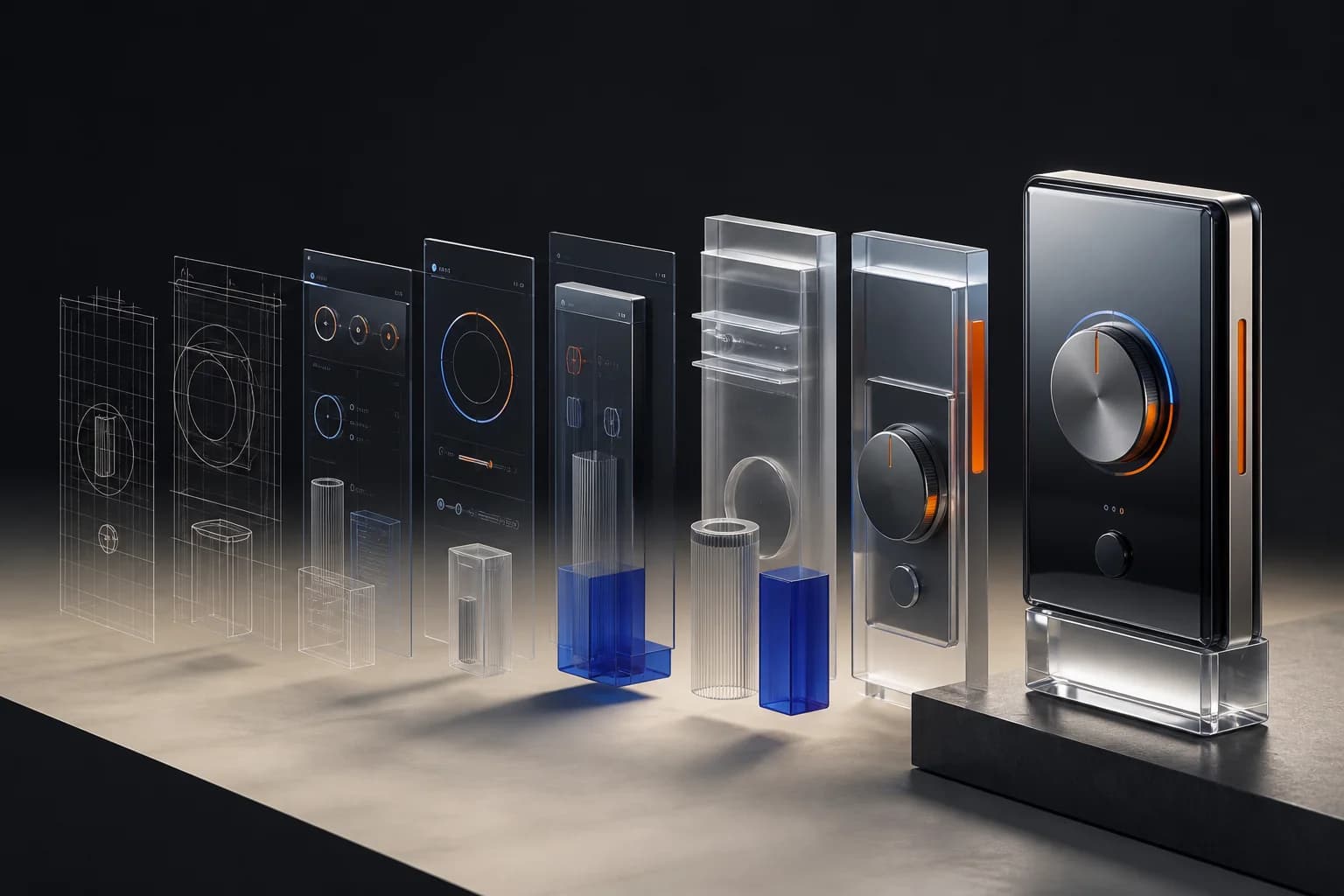
The gap is rarely technical
A prototype can make a new product feel inevitable. The journey is clear, the interaction has energy, and stakeholders can finally see the idea. Then delivery begins. Edge cases accumulate, timelines tighten, and small compromises slowly remove the qualities that made the concept compelling.
Teams often describe this as a handoff problem, but the deeper issue is a change in ownership. Design owns the possibility while engineering owns the reality. When those responsibilities are separated, nobody owns the complete experience.
Prototype the uncertainty
A useful prototype should answer the questions that could change the direction of the product. That might be whether people understand a new interaction, whether an integration can respond quickly enough, or whether a workflow still makes sense when real permissions and error states are introduced.
High visual fidelity is valuable when visual behavior is the risk. In other situations, a rough coded experiment, service blueprint, or clickable flow will teach the team more. The format should follow the uncertainty—not the other way around.
The prototype is not a picture of the finished product. It is the first working version of the team’s shared understanding.
Keep one product conversation
The strongest delivery teams review working software together from the beginning. Designers see what the system makes possible. Engineers understand which details carry the intent. Product owners make trade-offs with the experience visible rather than buried inside a ticket.
This rhythm also changes documentation. Instead of a large specification that becomes outdated, the team maintains a small set of durable decisions: experience principles, component behavior, data contracts, acceptance criteria, and the reasoning behind important trade-offs.
Measure the idea, not only the release
Shipping is a milestone, not evidence that the product worked. Before development accelerates, define the behavior the experience should change and the signals that would demonstrate progress. Those measures might include time to first value, completion confidence, successful self-service, or the quality of a repeated interaction.
When design, engineering, and measurement remain connected, production does not have to dilute the prototype. It can make the original idea more useful, more resilient, and more real.